What Color Has Been Shown to Reduce Your Ability to Think Clearly?
Slide and slide show pattern have a major impact on your ability to get your message across to your audience. Numerous books accost various blueprint fundamentals and slide design, but in that location isn't always consensus on what is "best." What research has shown, though, is that people take trouble grasping data when it comes at them simultaneously. "They will either listen to you or read your slides; they cannot practise both."[i] This leaves you, the presenter, with a lot of power to direct or scatter your audience'due south attention. This section volition serve as an overview of basic design considerations that fifty-fifty novices tin can use to improve their slides.
First and foremost, pattern with your audience in mind. Your slide show is not your outline. The show is as well not your handout. As discussed earlier, you can make a significantly more meaningful, content-rich handout that complements your presentation if you exercise not effort to salvage time by making a slide evidence that serves as both. Keep your slides short, create a separate handout if needed, and write equally many notes for yourself as you need.
All decisions, from the images you lot utilize to their placement, should be washed with a focus on your message, your medium, and your audience. Each slide should reinforce or enhance your message, and so brand conscious decisions about each element and concept you include[2] and edit mercilessly. Taken a step farther, graphic designer Robin Williams[3] suggests each element be placed on the slide deliberately in relation to every other element on the slide.
Providing the correct amount of data, neither too much nor too little, is one of the fundamental aspects in effective communication.[4] See Effigy 13.1 every bit an example of slides with too piddling or too much information. The foundation of this idea is that if the viewers have too piddling information, they must struggle to put the pieces of the presentation together. Most people, however, include too much information (e.chiliad., slides full of text, meaningless images, overly complicated charts), which taxes the audience's ability to process the bulletin. "There is simply a limit to a person's power to procedure new data efficiently and effectively."[five] As a presenter, reducing the amount of data directed at your audience (words, images, sounds, etc.) will help them to better remember your message.[6] In this case, less is really more than.
The first strategy to keeping it simple is to include only one concept or thought per slide. If you need more than i slide, use information technology, just don't cram more than than ane idea on a slide. While many have tried to proscribe the number of slides you need based on the length of your talk, there is no formula that works for every presentation. Apply just the number of slides necessary to communicate your message, and brand sure the number of slides corresponds to the amount of time allotted for your speech communication. Practice with more and fewer slides and more than and less content on each slide to find the balance between too much information and as well trivial.
With simplicity in mind, the goal is to have a slide that can be understood in 3 seconds. Think of information technology like a billboard you lot are passing on the highway.[7] Y'all can attain this by reducing the corporeality of irrelevant data, also known as noise, in your slide as much equally possible. This might include eliminating groundwork images, using clear icons and images, or creating simplified graphs. Your approach should be to remove as much from your slide every bit possible until it no longer makes any sense if you lot remove more.[8]
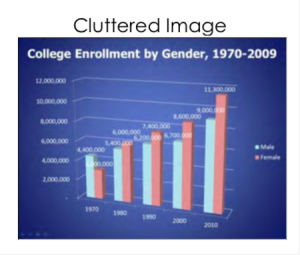
Figure xiii.2 past the Public Speaking Projection. CC-BY-NC-ND.
Slide Layout
It is easy to merely open up your slideware and start typing in the bullet points that outline your talk. If y'all do this, yous volition likely fall into the traps for which PowerPoint is infamous. Presentation design experts Reynolds[9] and Duarte[10] both recommend starting with paper and pen. This will assistance you interruption away from the text-based, bullet-filled slide shows we all dread. Instead, consider how yous can turn your words and concepts into images. Don't let the software atomic number 82 y'all into making a mediocre slide testify.
Regarding slide pattern, focus on simplicity. Don't over-crowd your slide with text and images. Cluttered slides are difficult to understand (see Effigy 13.two). Leaving empty infinite, also known equally white space, gives breathing room to your design. The white space actually draws attention to your focus point and makes your slide appear more elegant and professional. Using repetition of colour, font, images, and layout throughout your presentation volition help tie all of your slides together. This is specially important if a group is putting visuals together collaboratively. If you have handouts, they should also match this formatting in order to convey a more professional person look and tie all your pieces together.[11]
Some other full general principle is to use contrast to highlight your message. Contrast should not exist subtle. Make blazon sizes significantly different. Make contrasting prototype placements, such as horizontal and vertical, glaringly obvious. A general principle to follow: if things are not the aforementioned, then make them very, very different,[12] as in Figure 13.3.
A common layout design is chosen the dominion of thirds. If you split the screen using two imaginary lines horizontally and two vertically, you end up with 9 sections. The most visually interesting and pleasing portions of the screen will exist at the points where the lines intersect.
Adjustment your text and images with these points is preferred to centering everything on the screen.[thirteen] [xiv] Run across Figure 13.4. Experience free to experiment with the right and left aligned content for contrast and interest. Sticking with a centered layout ways more work trying to make the slide interesting.[15]
Agreement how people view images (and thus slides) can aid yous directly the viewer's attending to the main indicate of your slide. In countries that read text from left to right and height to bottom, like English-speaking countries, people tend to also read images and slides the same way. Starting in the upper left of the screen, they read in a Z blueprint, exiting the page in the bottom right corner unless their vision is side-tracked by the objects they are looking at (as in Figure 13.v).
Viewers' eyes are scanning from focus point to focus point in an image, and so y'all need to consciously create visual cues to direct them to the relevant data. Cues tin be created subtly past the placement of objects in the slide, past showing motion, or more than obviously by using a unproblematic arrow.[16] Make sure all people and pets are facing into your slide and preferably at your main point, equally in Figure xiii.6. If your slide contains a road, path, automobile, plane, etc., have them also facing into your slide. When the natural motion or gaze of your images points away from your slide, your viewers look that manner too. Being aware of this and addressing the natural tendencies of people when viewing images can help you select images and design slides that go along the viewer engaged in your message.[17]
Backgrounds and Effects
PowerPoint and other slideware has a diversity of templates containing backgrounds that are like shooting fish in a barrel to implement for a consistent slide show. Most of them, still, comprise distracting graphics that are counter to the simplicity you are aiming for in order to produce a articulate message. Information technology is all-time to utilize solid colors, if you even need a background at all. For some slide shows, you can make the slides with total-screen images, thus eliminating the demand for a background colour.
Graphic design is the paradise of individuality, eccentricity, heresy, abnormality, hobbies and humors. ~ George Santayana
Should you choose to use a background color, make sure you are consistent throughout your presentation. Unlike colors portray different meanings, simply much of this is cultural and contextual, and so there are few hard and fast rules about the significant of colors. One universal recommendation is to avoid the color red considering information technology has been shown to reduce your ability to retrieve conspicuously. Bright colors, such as yellow, pink, and orange, should also be avoided as groundwork colors, every bit they are too distracting. Blackness, on the other hand, is generally associated with sophistication and can be a very effective background as long as at that place is sufficient dissimilarity with the other elements on your slide.[18]
When designing your presentation, it is tempting to bear witness off your tech skills with glitzy transitions, wipes, fades, moving text, sounds, and a variety of other actions. These are distracting to your audience and should exist avoided. They draw attention abroad from you and your bulletin, instead focusing the audience'south attention on the screen. Since people naturally await at what is moving and expect it to hateful something, meaningless effects, no matter how subtle, distract your audience, and bear on their ability to grasp the content. Make sure that all your changes are meaningful and reinforce your message[xix].
Colors
At that place are complicated and fascinating biological and psychological processes associated with color and color perception that are beyond the scope of this chapter. Because color can take such a huge impact on the ability to see and understand your visuals, this department will explore basic rules and recommendations for working with color.
Color does not add together a pleasant quality to blueprint — information technology reinforces it. ~ Pierre Bonnard
Much of what we perceive in terms of a colour is based on what color is next to information technology. Exist certain to utilise colors that contrast and then they can be easily distinguished from each other (call up yellow and dark blue for loftier contrast, non dark blueish and purple).Loftier contrast improves visibility, particularly at a altitude. To ensure you have sufficient contrast, you can view your presentation in greyscale either in the software if available or by press out your slides on a black and white printer.[20]
Equally seen in Figure 13.vii, warm colors (reds, oranges, yellows) announced to come to the foreground when ready next to a cool color (blues, grays, purples) which recede into the background. Tints (pure colour mixed with white, think pink) stand up out against a darker background. Shades (pure color mixed with black, retrieve maroon ) recede into a light background.[21] If y'all desire something to stand up out, these color combination rules can act as a guide.
Avoid using red and green closely together. Crimson-green color blindness is the predominate form of color blindness, meaning that the person cannot distinguish betwixt those two colors (Vorick, 2011). There are other forms of color blindness, and you tin easily check to see if your visuals volition be understandable to anybody using an online tool such as the Coblis Color Blindness Simulator to preview images equally a color-blindperson would see it. Sure red-blueish pairings can be difficult to look at for the not-color blind. These colors appear to vibrate when side by side to each other and are distracting and sometimes unpleasant to view.[22]
With all these rules in place, selecting a color palette, the group of colors to use throughout your presentation, tin be daunting. Some color pairs, similar complementary colors or analogous colors as in Effigy 13.eight, are naturally pleasing to the eye and can be piece of cake options for the color novice. There are also online tools for selecting pleasing color palettes using standard colour pairings including Kuler and Color Scheme Designer. You can also use websites like Colorbrewer to help identify an appropriate palette of colors that are visually distinct, appropriate for the colorblind, and that volition photocopy well, should y'all decide to also include this information in a handout.
I'm a visual thinker, not a language-based thinker. My brain is like Google Images. ~ Temple Grandin
Fonts
There are thousands of fonts available today. One might even say there has been a renaissance in font pattern with the onset of the digital age. Despite many beautiful options, it is all-time to stick to standard fonts that are considered screen-friendly. These include the serif fonts Times New Roman, Georgia, and Palatino, and thesans serif fonts Ariel, Helvetica, Tahoma, and Veranda.[23] These fonts work well with the limitations of computer screens and are legible from a distance if sized appropriately. Other non-standard fonts, while attractive and middle-catching, may not display properly on all computers. If the font isn't installed on the calculator you are presenting from, the default font will exist used which alters the text and design of the slide.
Readability is a top concern with font utilise, peculiarly for those at the back of your audition, furthest from the screen. Afterward you have selected a font (run into previous paragraph), make sure that the font size is large plenty for everyone to read clearly. If you have the opportunity to utilize the presentation room before the event, view your slides from the dorsum of the room. They should be clearly visible. This is not always possible and should not be done immediately preceding your talk, as you lot won't have fourth dimension to effectively edit your entire presentation. Presentation guru Duarte[24] describes an ingenious way to test visibility from your own computer. Measure your monitor diagonally in inches, display your slides, so step back the aforementioned number of feet as you lot measured on your monitor in inches. If you have a 17 inch screen, pace back 17 anxiety to encounter what is legible.
Create your own visual style… let it be unique for yourself and yet identifiable for others. ~ Orson Welles
In addition to font style and size, at that place are other font "rules" to improve your slides. Don't utilise decorative, script, or visually circuitous fonts. Never employ the Comic Sans font if y'all want to retain any credibility with your audience. If you must use more 1 font, use one serif font and one sansserif font. Use the same font(due south) and size(s) consistently throughout your presentation. Don't use all upper case or all assuming. Avoid small caps and all discussion art, shadows, outlines, stretching text, and other visual furnishings. Use italics and underlines only for their intended purposes, non for blueprint. While there are many rules listed hither, they can exist summarized every bit" continue information technology every bit unproblematic as possible."[25] Run across Effigy 13.nine for examples of poor font choices.
Text
Nothing is more hotly debated in slide design than the amount of text that should exist on a slide. Godin says "no more than vi words on a slide. EVER."[26] Other common approaches include the 5×5 dominion—5 lines of text, 5 words per line—and similar vi×6 and 7×vii rules.[27] Fifty-fifty with these recommendations, it is still painfully common to see slides with and so much text on them that they can't be read by the audience. The type has to exist then small to fit all the words on the slide that no one tin can read information technology. Duarte[28] keenly points out that if you accept also many words, y'all no longer take a visual aid. You take either a paper or a teleprompter, and she recommends opting for a small number of words.
Once you understand that the words on the screen are competing for your audience'south attending, it will be easier to edit your slide text down to a minimum. The adjacent fourth dimension you are watching a presentation and the slide changes, find how you aren't really grasping what the speaker is saying, and you also aren't really understanding what you are reading. Studies have proved this split-attention affects our ability to retain information;[29] then when presenting, you need to give your audience silent reading time when you display a new slide. That is: talk, advance to your side by side slide, wait for them to read the slide, and resume talking. If you consider how much time your audience is reading rather than listening, hopefully you will determine to reduce the text on your slide and return the focus dorsum to you, the speaker, and your message.
In that location are several ways to reduce the number of words on your page, just don't do it haphazardly. Tufte[30] warns against abbreviating your message but to make it fit. He says this dumbs downwardly your message, which does a disservice to your purpose and insults your audience's intelligence. Instead, Duarte[31] and Reynolds[32] recommend turning equally many concepts equally possible into images. Studies have shown that people retain more information when they run into images that relate to the words they are hearing.[33] And when people are presented data for a very short time, they call up images better than words.[34]
Tip
An like shooting fish in a barrel way to guess how much time your audience needs to read your slide silently, is to read the slide text to yourself in reverse order.
The ubiquitous use of bulleted lists is also hotly debated. PowerPoint is practically designed around the bulleted-list format, even though is it regularly blamed for dull, tedious presentations with either overly dense or overly superficial content.[35] Mostly this format is used (incorrectly) as a presenter's outline. "No one can do a skillful presentation with slide after slide of bullet points. No One."[36] Reserve bulleted lists for specifications or explaining the order of processes. In all other cases, expect for ways to use images, a short phrase, or even no visual at all.
Quotes, on the other hand, are not as offensive to design when they are short, legible, and infrequently used. They can exist a very powerful manner to hammer a betoken dwelling or to launch into your next topic.[37] See Effigy thirteen.10 for an case. If you do use a quote in your slide bear witness, immediately cease and read information technology out loud or let time for it to exist read silently. If the quote is important plenty for you to include it in the talk, the quote deserves the audition'due south time to read and retrieve about it. Alternately, use a photo of the speaker or of the discipline with a phrase from the quote y'all volition exist reading them, making the slide enhance the point of the quote.
Images
Images can exist powerful and efficient means to tap into your audition'due south emotions. Use photographs to introduce an abstract idea, to evoke emotion, to nowadays evidence, or to direct the audience attention, only make sure it is compatible with your message.[38] Photos aren't the only images available. Y'all might consider using simplified images like silhouettes, line fine art, diagrams, enlargements, or exploded views, but these should be high quality and relevant. Simplified can be easier to sympathize, particularly if you are showing something that has a lot of detail. Simple images also translate meliorate than words to a multicultural audience.[39] In all cases, cull only images that raise your spoken words and are professional-quality. This generally rules out the clip art that comes with slideware, whose apply is a sign of amateurism. Select loftier-quality images and don't exist agape to utilize your entire slide to display the image. Boldness with images often adds bear on.
When using images, do not enlarge them to the point that the image becomes blurry, also known equally pixelation. Pixelation, (Figure 13.xi) is caused when the resolution of your paradigm is too low for your output device (e.g. printer, monitor, projector). When selecting images, look for clear ones that tin be placed in your presentation without enlarging them. A good dominion of thumb is to use images over i,000 pixels wide for filling an entire slide. If your images brainstorm to pixelate, either reduce the size of the image or select a different image.
Never use an image that has a watermark on information technology, as in Figure 13.2. A watermark is text or a logo that is placed in a digital epitome to prevent people from re-using it. It is mutual for companies that sell images to take a preview bachelor that has a watermark on it. This allows you lot, the potential customer, to run into the paradigm, but prevents you lot from using the epitome until yous have paid for information technology. Using a watermarked image in your presentation is unprofessional. Select another image without a watermark, take a similar photo yourself, or pay to get the watermark-gratis version.
Yous can create images yourself, use free images, or pay for images from companies like iStockphoto for your presentations. Purchasing images can go expensive quickly, and searching for free images is time consuming. Be sure to only utilise images that you lot have permission or rights to use and give proper credit for their utilise. If you are looking for free images, endeavor searching the Creative Eatables database for images from places like Flickr, Google, and others. The creators of images with a Creative Commons License allow others to use their piece of work, simply with specific restrictions. What is and isn't immune is described in the license for each image. Generally, images can be used in educational or non-commercial settings at no price as long as you requite the photographer credit. Also, images created by the U.Due south. regime and its agencies are copyright complimentary and can be used at no cost.
1 last consideration with using images: having the same paradigm on every page, be it part of the slide background or your visitor logo, tin be distracting and should be removed or minimized. As mentioned before, the more you can simplify your slide, the easier it will be for your bulletin to be understood.
Graphs and Charts
If you have numerical information that you lot desire to present, consider using a graph or chart. You lot are trying to make a specific point with the data on the slide, and then make sure that the point—the conclusion y'all want your audience to depict—is clear. This may mean that yous reduce the corporeality of data you lot present, even though information technology is tempting to include all of your data on your slide.
Information technology is all-time to minimize the amount of information and focus instead on the simple and clear conclusion.[40] You tin include the complete data gear up in your handout if you feel it is necessary.[41] Particularly when it comes to numerical data, place the meaning in the numbers and exclude the rest. "Audiences are screaming 'make it articulate,' not 'cram more in.' You won't oft hear an audience member say, 'That presentation would have been then much ameliorate if it were longer."[42] In some cases you can even ditch the graph birthday and display the i relevant fact that is your conclusion.
Unlike charts have different purposes, and it is important to select the one that puts your data in the appropriate context to exist clearly understood.[43] Pie charts show how the parts relate to the whole and are suitable for upwards to eight segments, every bit long every bit they remain visually distinct.[44] Offset your outset slice of the pie at 12:00 with your smallest portion and proceed effectually the circle clockwise every bit the sections increase in size. Usea line graph to show trends over time or how information relates or interacts. Bar charts are expert for showing comparisons of size or magnitude[45] and for showing precise comparisons.[46] There are other types of charts and graphs available, but these are the most common.
When designing charts, one should use hands distinguishable colors with articulate labels. Be consistent with your colors and information groupings.[47] For clarity, avoid using 3-D graphs and charts, and remove as much of the background noise (lines, shading, etc.) equally possible.[48] All components of your graph, in one case the clutter is removed, should be distinct from whatever background color. Finally, don't become too circuitous in any one graph, make sure your message is as clear as possible, and brand certain to visually highlight the decision you want the audience to draw.
Source: https://courses.lumenlearning.com/publicspeaking/chapter/chapter-13-design-principles/
0 Response to "What Color Has Been Shown to Reduce Your Ability to Think Clearly?"
Post a Comment